The day dawns early. Rather it is still dark out, but the Islamic call to prayer at 5 am followed by the Catholic Church bells at 6 am precede the actual sunrise by a large margin.
So, dawn is a welcome arrival to actually see our surroundings I look out of the room to see where we will be living for the next few months. Or rather I look out through the lace curtains that cover the windows. Mine won’t move out of the. This must be pay back. I have fought to keep lace curtains out of my house back in New Jersey. Bahadir loves them. I do not. So, now I will have a window full of lace curtains from the only room I occupy. There is no way to remove them. I have checked.
The scene is very pastoral though (pun intended?). The Catholic Social Learning and Training Center occupies a large plot of land. There are numerous buildings skirting the large open plazas (doubling as driveways). There are the lower price accommodations with enough space for you or your luggage, but not both (our original rooms). There are other low slung buildings with slightly more spacious accommodations. There is the bishops building for visiting dignitaries including the bishop. It has sleeping rooms and attached living areas, one with a refrigerator. They are the most luxurious.
Then there is the building that we are located now. It is the only two story building on the property, and has comfortable space including a full sized bed with mosquito netting, a table and chair, a tall and narrow mirror on wheels, a tiny TV with a cross above it, a built-in wardrobe that is warped so the locks don’t’ work, and a bathroom with western toilet, sink, and an open show that contains most of the water.
But, I digress. After a breakfast of a boiled egg and some white, untoasted bread, we were off to officially meet the first officials. We had been lucky enough to have been visited by the regional medical officer (RMO) the night before at dinner but this would be the first time we could officially meet.
While the process is largely invisible to us thanks to our local project manager, there is a strict protocol and process for meeting people here. Letters must be written, calls made, approvals granted and permission to visit must be secured. It all starts at the top and winds itself down through different districts, wards, villages and repeats itself for different departments. There is no popping by for a visit.
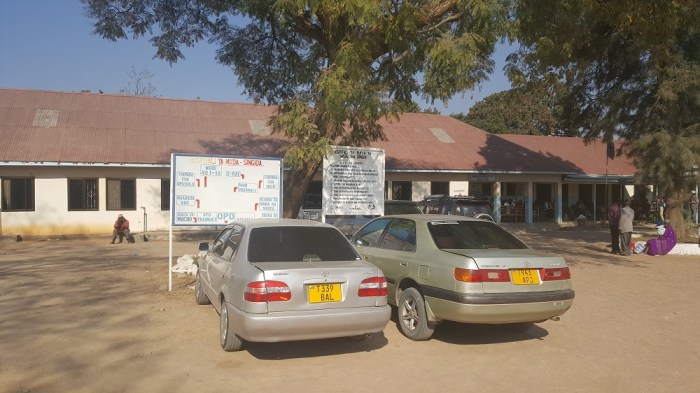
We entered the RMO’s office which is located in an administrative wing of the hospital. Much like the popular style of school layouts from the 50s onward, the low slung building are connected by concrete walkways covered but open to the wind. (natural air conditioning in this climate). We enter the room and it is larger than most with a large desk in the back of the room. In front of the desk is a table perpendicular to the desk that is used to receive visitors. There are stacks of files and reports stuck in glass-fronted cabinets as well as laying around.
Chairs are around the table and others sit along the side of the room for overflow visitors. We sit in the chairs with our NGO partners. One of the NGO partners from the local country office introduces us. Helen is an easy name to pronounce. Gökhan is difficult. Scott proves problematic. Where we come from, our purpose in being here, our connection to the NGO, and the work we want to do is explained. It is then time to introduce ourselves and have our leader explain our work in our words.
Importantly, a visitor’s book is passed around the table. This is a large, ledger-style bound book that includes the date, name, ID number, organization, address, and signature of each visitor in the room. It carefully documents each visitor to the office. While you don’t noticeably feel it, it reminds you that everything and everyone is tracked here.
After all the formalities, we begin our conversation and our actual work starts


 Tanzania Sight